


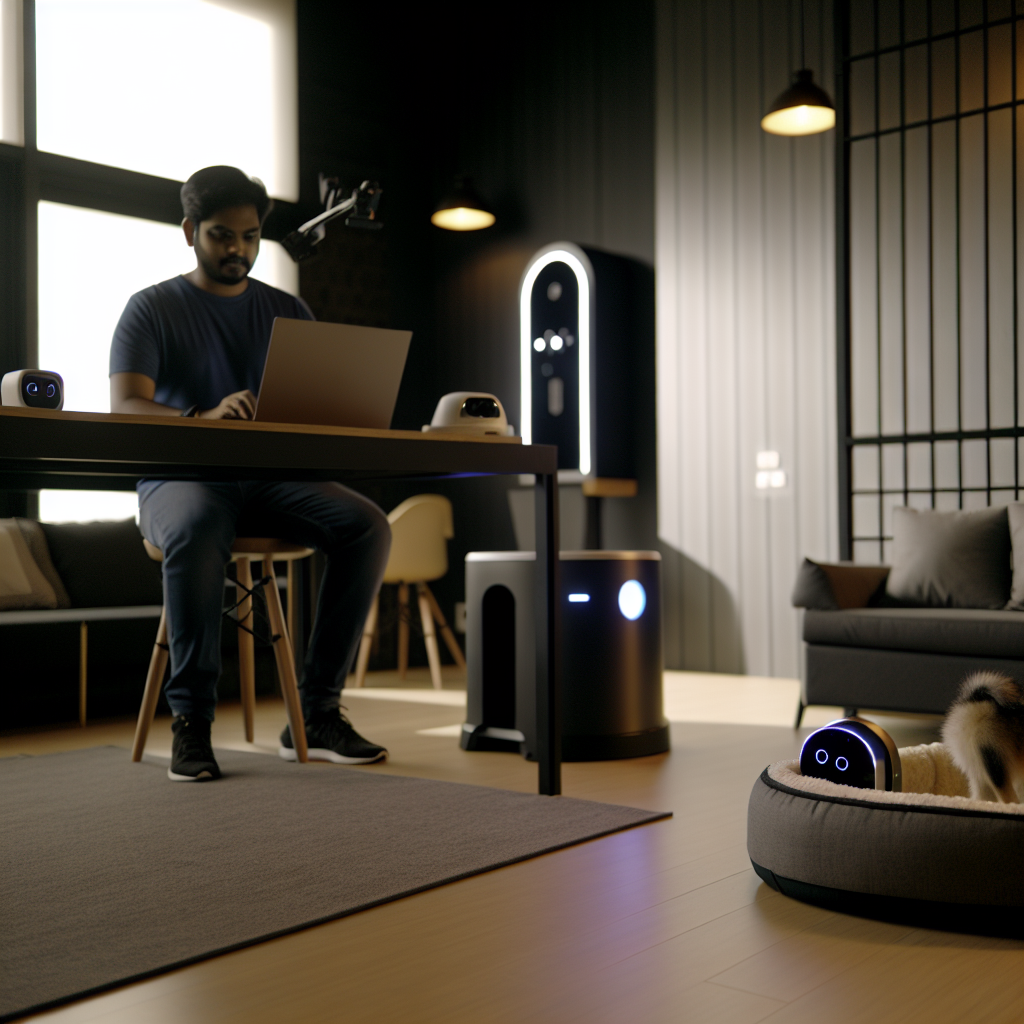
Pet gadgets 2025 are revolutionizing how tech-savvy owners care for dogs and cats. From AI-powered cameras to smart doors that detect pet behavior, this year’s innovations bring automation and monitoring directly into the home.
The Featured image is AI-generated and used for illustrative purposes only.
How Pet Gadgets 2025 Are Changing Pet Care
This year, AI integration in pet technology has introduced smarter, more responsive devices. According to a 2024 Pet Tech Trends Report by Statista, 67% of pet owners want real-time insights into their pets’ health and behavior. These demands are now being met with AI-enabled solutions that monitor, interpret, and even predict pet needs.
For example, the Furbo 360° Dog Camera released in late 2024 uses machine learning to detect barking, pacing, or unusual movement patterns. It sends alerts to owners in real time and even dispenses treats remotely. These AI tools improve pet safety and reduce anxiety for owners who work long hours.
Best AI Cameras for Monitoring Your Pet
Several of 2025’s most popular pet gadgets fall under the smart camera category. These devices don’t just stream video—they analyze and interpret behavior using machine learning algorithms and neural networks.
- Furbo 360° AI: Detects barking, tail-chasing, and human delivery arrivals.
- PETKIT Smart Cam Pro: Offers two-way audio and logs pet activity summaries in a mobile app.
- Ebo SE Companion Robot: Interacts with your pet via motion sensors and autonomous movement.
The key advantage of these artificial intelligence platforms is behavioral recognition. Unlike traditional webcams, they use AI training models to identify distress, boredom, or excitement based on movement patterns and sound intensity. Developers are embedding edge processing directly in these devices, minimizing cloud load and boosting response times by over 50% compared to early 2023 models.
Smart Pet Doors with Predictive Entry Technology
Pet gadgets 2025 also include smart doors that rely on sensor fusion—combining RFID tags, motion detection, and behavior analysis—to determine the ideal time to unlock for your animal.
The SureFlap Microchip Pet Door Connect integrates with most pets’ embedded microchips. However, brands like Petcube AI Gate, launched in Q3 2024, now use environmental data and custom-trained models to detect pacing or vocal cues near the door, automatically opening it and notifying the owner.
This predictive AI reduces accidental lockouts and provides increased independence for indoor/outdoor pets without compromising security.
Wearable Trackers for Real-Time Health Monitoring
Wearables are another category where smart pet technology has taken major strides. These gadgets collect biometrics like heart rate, rest cycles, and activity minutes—and feed them into data processing platforms for behavioral predictions.
Popular pet wearables in 2025 include:
- Whistle Health Tag: Offers real-time GPS location and vet-friendly health reports.
- FitBark GPS 2: Tracks anxiety levels, calories burned, and sleep quality.
- Invoxia Smart Collar: Uses machine learning for respiratory and cardiac pattern recognition.
Developers using Python-based machine learning libraries like TensorFlow Lite train on historical health and activity data to offer predictive alerts—such as when a dog shows early signs of osteoarthritis. These alerts reduce emergency vet visits by up to 38% according to a 2024 clinical study published in PetTech Journal.
Feeding Stations and AI Nutrition Systems
Feeding automation remains a top priority for busy professionals. Modern smart feeders now incorporate AI to personalize meal times, monitor consumption, and detect abnormal eating patterns.
The Petlibro Granary Feeder, launched Q4 2024, uses onboard sensors and a machine learning backend to learn your pet’s ideal feeding windows. It integrates with temperature and humidity sensors to protect dry food from spoilage—ideal for areas with unstable climates.
Some platforms connect directly to veterinary APIs, allowing vets to prescribe meal portions remotely and access consumption logs for diet planning.
The Future of Pet Gadgets: Predictions for 2026
Pet gadgets 2025 demonstrate how artificial intelligence platforms have matured beyond novelty. Companies are now releasing SDKs and APIs to support developer integration with home automation ecosystems like Matter, HomeKit, and SmartThings.
Looking into early 2026, expect to see:
- More machine learning software tailored for exotic pet species
- Improved neural network accuracy for behavioral diagnostics
- Greater edge-AI processing to eliminate cloud lag during emergencies
Hardware-software convergence will also grow, as semiconductor companies work with pet tech startups to create custom AI chipsets that reduce power consumption by 30–40%.
Conclusion: Why Pet Gadgets 2025 Matter for Tech-Minded Owners
Pet gadgets 2025 show how far we’ve come from basic toys and feeders. The integration of AI, data processing, and behavioral analytics creates a connected pet experience that strengthens care and simplifies management.
- AI cameras analyze pet behavior and alert owners instantly
- Wearables track health metrics and predict anomalies with machine learning
- Smart devices automate feeding, door access, and health reporting
Tech professionals who own pets should consider adding AI-powered tools before Q1 2026 to enhance care routines with real insights. Developers interested in growth areas may also explore SDK integrations for pet IoT systems, which are expected to grow 17% YoY through 2026 (Gartner, Q4 2024).
Whether you’re a developer, product manager, or engineer—these tools offer real-world benefits your pets will appreciate.

