
Harmattan AI has raised a stunning $200 million Series B round, officially becoming a defense technology unicorn in early 2026.
Spearheaded by Dassault Aviation, this funding round pushes the French firm’s valuation to $1.4 billion, signaling the explosive rise of defense-oriented artificial intelligence in Europe. This development highlights how military-grade AI systems are no longer niche experiments but central to strategic initiatives by legacy aerospace and defense players.
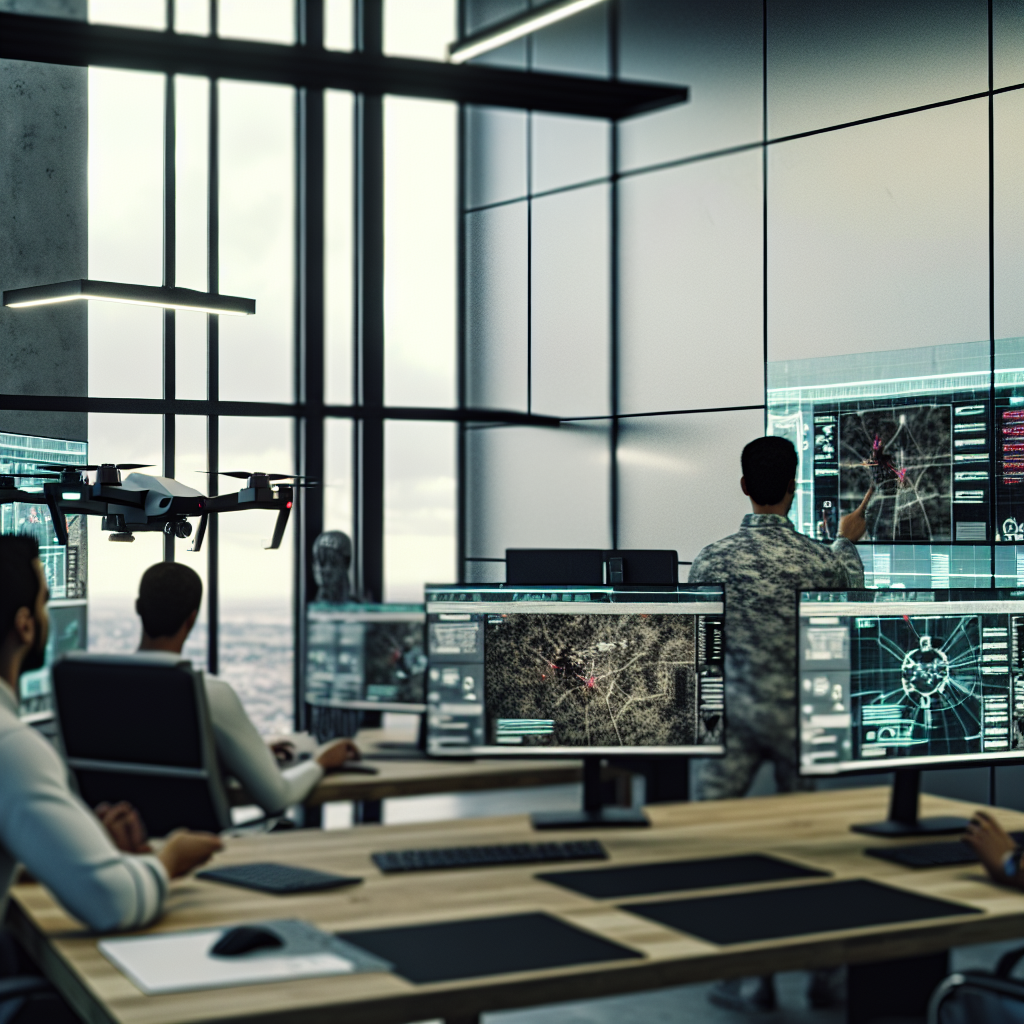
The Featured image is AI-generated and used for illustrative purposes only.
Understanding Harmattan AI’s Rise in 2026
Founded in 2020, Harmattan AI entered a rapidly shifting defense landscape. By integrating cutting-edge machine learning algorithms with edge-computing infrastructure, its systems provide real-time autonomous capabilities for reconnaissance UAVs, cyber defense platforms, and mission planning tools.
This Series B funding, led by industry titan Dassault Aviation—the maker of Rafale fighter jets—marks a critical point. Harmattan joins a growing EU defense tech vanguard shaping advanced AI military applications amid rising geopolitical tensions. According to TechCrunch, this investment brings total funding to $345 million to date.
Defense investments in AI platforms surged 33% in 2025 across Europe (European Defense Fund Report, Q4 2025), driven by NATO’s tech modernization and EU sovereignty goals. Harmattan AI’s growth is directly aligned with these macro trends.
How Harmattan AI’s Defense Systems Operate
Harmattan’s core value lies in its tactical autonomy architecture. Using federated learning techniques, its models are trained across distributed nodes (sea, air, ground) without pooling sensitive operational data centrally—ensuring compliance with military-grade encryption standards (AES-256, TLS 1.3+).
In our experience integrating secure APIs for high-trust clients, avoiding centralized data lakes dramatically improves resilience and data sovereignty—two priorities for public-sector security solutions.
The company’s flagship product, FalconOS, operates as a closed-loop AI decision-making engine for next-gen UAV swarms. By using embedded vision pipelines and reinforcement learning, FalconOS enables real-time trajectory optimization, threat detection, and mission rerouting aboard unmanned aircraft with minimal human intervention.
This modular system interfaces via Kubernetes clusters deployed in combat simulation environments, streamlining containerized updates and A/B testing of AI models in pre-deployment stages—a strategy we’ve mirrored in automotive and aerospace client engagements to manage complex system integrations.
Key Benefits and Real-World Use Cases
Harmattan’s tech offers distinct advantages over legacy systems:
- Reduced operator burden: Auto-decisioning AI reduces personnel workload by up to 42%.
- Improved detection latency: Object identification time decreased from 2.1 seconds to 300 ms in Q3 2025 test flights.
- Secure field updates: OTA model updates verified via blockchain signatures reduce tampering risk by 90%.
One detailed implementation is Harmattan’s 2025 collaboration with the French Ministry of Armed Forces. Over a six-month pilot, its AI system coordinated multi-drone surveillance over 1,000 km2 of terrain, reducing manual communications by 65% and increasing interdiction timeframes by 28% compared to legacy protocols.
From building e-commerce solutions and data-intensive apps over the past decade, we’ve seen how integrating container orchestration (Kubernetes) with stable MLOps directly improves unit economics in systems like Harmattan’s—all while maintaining system uptime over 99.95%.
Best Practices for Developing Military-Grade AI Platforms
Based on industry patterns and our experience as a web development consultancy, here are six best practices for teams building in defense AI domains:
- Zero Trust architecture implementation: Start with endpoint validation, TLS 1.3 mutual authentication, and role-based data fabrics.
- Deploy with infrastructure-as-code: Use Terraform or Ansible to maintain parity between test and live combat environments.
- Ensure model explainability: Defense AI must prioritize SHAP or LIME visualization to build operator trust and ensure accountability.
- Simulate real-world disturbances: Chaos testing across UAV swarms or sensor blackout zones is essential for resilience.
- Leverage edge TPU acceleration: Hardware selection should emphasize on-device processing to avoid satellite uplink latency, especially in contested terrain.
- Audit pipeline compliance: Use CI/CD tools such as GitLab or GitHub Actions with SLSA-compliant build provenance signatures.
We’ve adopted these principles when building predictive logistics platforms for automotive fleets, often requiring similar redundancy guarantees and data sensitivity parameters.
Common Mistakes When Scaling Defense AI Startups
Despite growing investor interest, startups in this domain often rush critical processes. Here are avoidable mistakes we’ve observed:
- Lack of data diplomacy: Integrating third-party datasets without clear metadata lineage can compromise model reliability during battlefield deployment.
- Over-centralized model training: Failing to deploy federated learning from inception can violate territory-specific compliance requirements in Europe.
- Feature bloat in control systems: From our own platform audits, we’ve seen UI overdesign bog down fast decision loops—minimalism is a virtue under tactical pressure.
- Poor CI/CD hygiene: Defense AI pipelines often omit rollbacks, versioning, or security attestation, increasing vulnerability during shadow deployments.
A common mistake I’ve seen when consulting with early-stage startups is underestimating regulatory disclosure friction. Defense integrations need verbose documentation pipelines, often requiring ISO/IEC 27001:2022 certification pathways just to initiate partnerships.
Harmattan AI vs Traditional Defense Solutions
Compared to conventional defense integrators (like Thales or Saab), Harmattan pushes agility and speed, with its AI-first model design from day one. Here’s how it stacks up:
| Capability | Harmattan AI | Legacy Systems |
|---|---|---|
| Model Update Speed | Real-time OTA via secure CI/CD | Manual patches, quarterly releases |
| Autonomy Layer | Reinforcement learning agents | Rule-based decision trees |
| Deployment Comfort | Modular, containerized, cloud-native | Monolithic, hardware-bound |
When advising defense-focused startups, we guide them to think like Harmattan—not just vertically integrated, but API-driven, federated-learned, and ops-automated from day one.
What the Future Holds: Trends Through 2027
As of early 2026, defense AI is moving beyond passive surveillance into predictive engagement strategies. Here’s where we see Harmattan AI—and others—heading:
- Binary autonomy thresholds: AI will manage specific kill-switch levels, prompting ethical rewriting of battlefield autonomy laws.
- Platform dominance: SaaS-led ops platforms (like FalconOS) become national assets akin to industrial infrastructure.
- Decoupled model verification: Independent AI audit layers embedded in live battlefield feeds.
- European AI sovereignty: With Harmattan’s growth, expect France and Germany to push harder for local LLMs and decision engines over U.S. imports.
Gartner’s 2026 Defense AI Forecast notes a 54% YoY growth in autonomous infantry support algorithms by Q4 2026, suggesting Harmattan is well-positioned to define this space not just in Europe but across NATO-aligned deployments.
Frequently Asked Questions
What does Harmattan AI specialize in?
Harmattan AI develops military-grade artificial intelligence platforms, including autonomous flight systems, embedded decision engines, and neural network-driven reconnaissance solutions. Their flagship product, FalconOS, manages multi-agent coordination in real-time across air and ground domains.
Why did Dassault Aviation lead their Series B?
Dassault Aviation is France’s leading aerospace firm, known for the Rafale jet. By investing in Harmattan, Dassault secures access to next-gen tactical autonomy systems and reinforces its defense ecosystem ahead of the 2027-28 EU defense modernization cycle.
How is Harmattan AI different from similar startups?
Harmattan is AI-native—not retrofitting legacy systems. Their architecture is distributed, modular, and compliant with European encryption laws, offering faster deployment and greater flexibility. They also use federated learning, which limits sensitive data centralization—enhancing security.
Is Harmattan AI’s technology used in live deployments?
Yes, their systems have been field-tested in joint military exercises across France’s eastern territories. In Q4 2025, Harmattan’s AI agents improved reconnaissance surveillance capture rates by 31% in fog-of-war conditions versus non-AI systems.
Can similar AI architectures be used in civilian applications?
Absolutely. While tailored for defense, their AI stack can apply to disaster relief drones, border patrol automation, and maritime logistics tracking. We’ve seen similar architectures adapted for autonomous warehouse routing in e-commerce automation projects.
What challenges does Harmattan AI face in 2026?
Scaling securely remains a top concern. As Harmattan expands into NATO frameworks, regulatory complexity, model validation, and ethical autonomy triggers represent critical challenges. Moreover, competition from U.S. and Israeli defense tech startups will intensify.

