

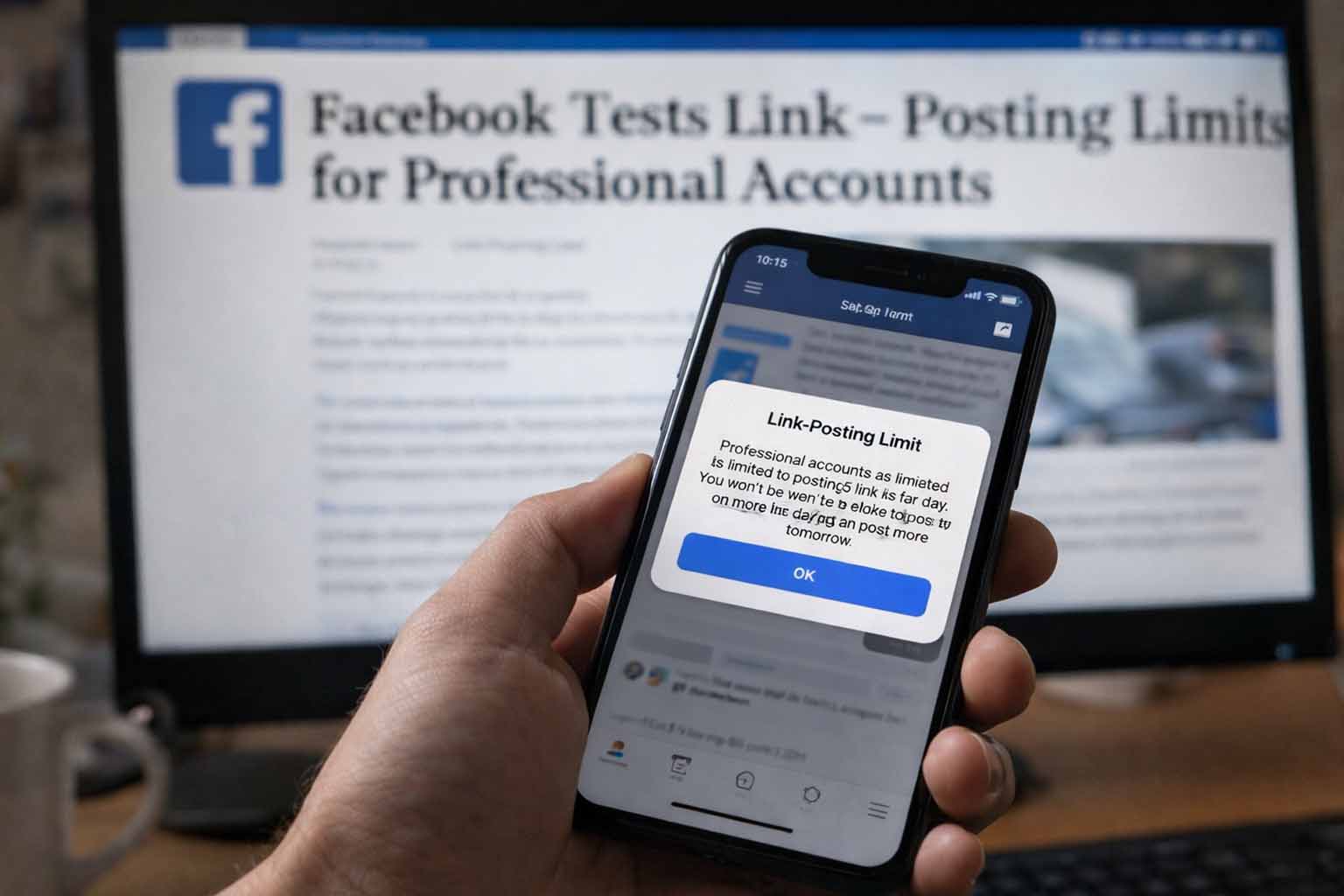
Facebook is testing a new restriction that limits how frequently professional accounts and Facebook Pages can post external links. The experiment, which appears to target creators, publishers, and businesses, signals another step in Meta’s broader effort to prioritize native content over outbound traffic.
The test has not been formally announced, but reports from affected users indicate that Facebook is experimenting with caps on link-based posts within a given time window. If widely implemented, the change could significantly alter how brands and creators use Facebook to drive traffic to websites, newsletters, and e-commerce platforms.
This development matters because Facebook remains a major referral source for many publishers and businesses. Any constraint on link sharing could reshape content strategies, advertising spend, and audience growth plans across the platform.
What the Link-Posting Limit Test Involves
Under the test, professional accounts and Pages may encounter limits after posting a certain number of link posts within a short period. Once the threshold is reached, users reportedly see warnings or temporary restrictions preventing additional link sharing.
The limits appear to apply specifically to posts that send users off Facebook, such as links to blogs, news articles, YouTube videos, or product pages. Native posts—such as text updates, photos, videos, Reels, and Stories—do not seem to be affected in the same way.
Meta has not clarified how the thresholds are calculated or whether they vary by account size, category, or past behavior. This suggests the test is still exploratory, with parameters likely to change based on engagement data and user feedback.
Why Facebook Is Testing Link Restrictions
Facebook’s motivation aligns with a long-standing platform trend: keeping users engaged within its own ecosystem. External links often lead users away from Facebook, reducing time spent on the app and limiting opportunities for ad exposure.
In recent years, Meta has consistently boosted native formats, particularly short-form video and algorithmically recommended content. Link posts, by contrast, generally receive lower distribution unless they generate strong engagement quickly.
By testing link-posting limits, Facebook may be attempting to:
- Encourage creators to publish more native content
- Reduce low-quality or spammy link sharing
- Improve feed quality and user retention
- Push businesses toward paid promotion for outbound traffic
This approach mirrors similar shifts seen on other platforms, where organic reach for links has steadily declined.
Impact on Creators, Publishers, and Businesses
If rolled out broadly, a Facebook link-posting limit could have meaningful consequences across industries.
For publishers and media outlets, reduced ability to share articles may lead to lower referral traffic and increased reliance on search engines or newsletters. Smaller publishers could be disproportionately affected, as they often depend on frequent link sharing to maintain visibility.
For creators, especially coaches, educators, and influencers, the change may complicate efforts to drive followers to external products, courses, or subscription platforms. Posting fewer links could force a heavier emphasis on call-to-action comments, profile links, or Stories.
For businesses and e-commerce brands, the test reinforces the growing importance of paid ads. Organic link distribution has already become less reliable, and additional limits may further push brands toward advertising budgets to maintain traffic flow.
How Professionals Can Adapt Their Strategy
While the test is limited for now, it offers a preview of where Facebook’s strategy may be heading. Professional accounts can prepare by adjusting how they use links on the platform.
Effective responses may include:
- Prioritizing native video, Reels, and image posts
- Using link posts more strategically rather than frequently
- Placing links in comments or profile sections where allowed
- Repurposing long-form content into on-platform summaries
- Testing paid promotion for high-value outbound links
Diversifying traffic sources is also critical. Relying too heavily on any single social platform increases risk when algorithms or policies change.
What This Means for Facebook’s Broader Direction
The link-posting limit test fits into a larger pattern of Facebook evolving from a traffic distribution platform into a content destination. Meta increasingly positions Facebook as a place where discovery, consumption, and interaction happen without leaving the app.
For professionals, this reinforces a key reality of modern social media: platforms reward content that serves their business goals first. External links are still allowed, but they are no longer the centerpiece of organic growth strategies.
Whether the test becomes a permanent feature remains uncertain. However, the experiment itself signals that Facebook is willing to impose structural limits on link sharing if it improves engagement metrics and platform retention.
Conclusion: A Subtle but Significant Shift
Facebook’s test of link-posting limits for professional accounts and Pages may seem minor, but its implications are substantial. By placing friction on outbound links, Meta is nudging creators and businesses toward native content and paid distribution.
For now, professionals should monitor their accounts closely, experiment with alternative content formats, and reassess how Facebook fits into their broader marketing mix. If the test expands, adaptability—not volume—will determine who maintains reach and influence on the platform.

