


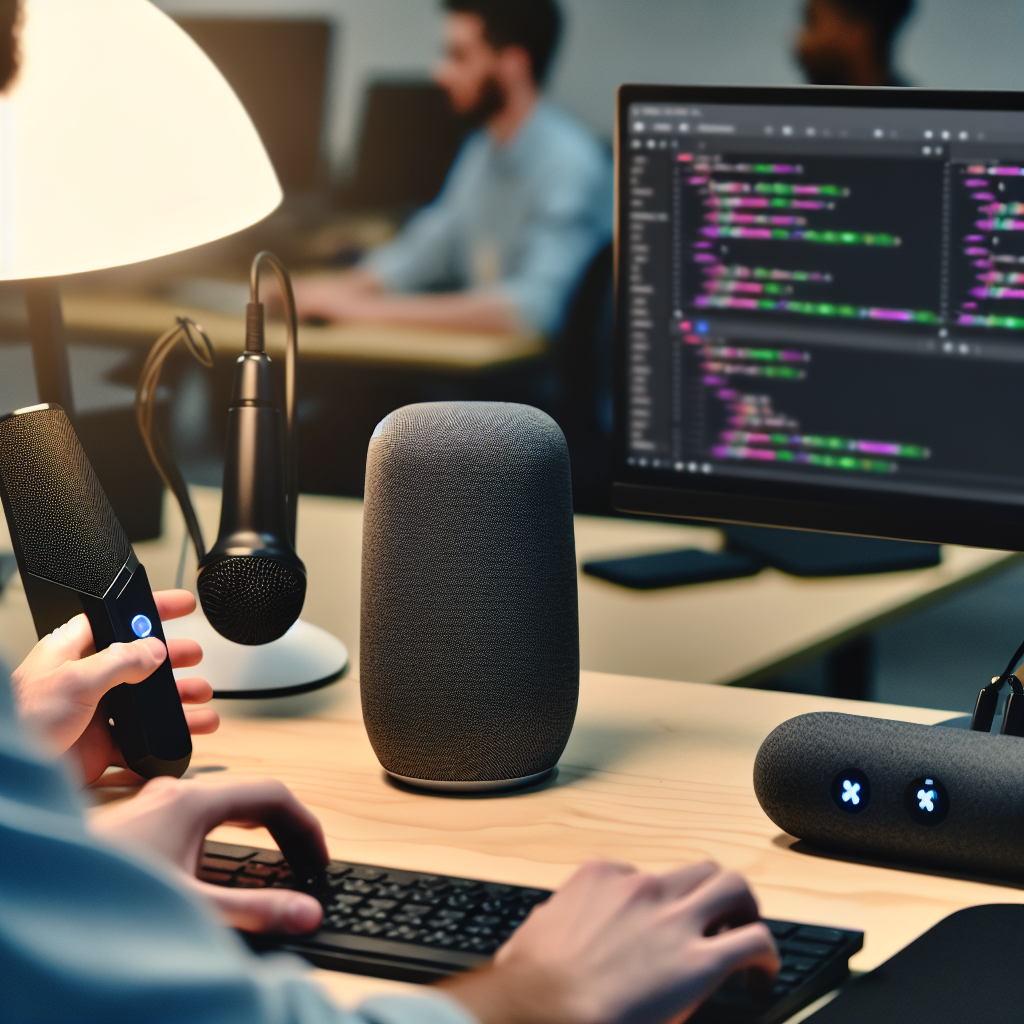
Audio interfaces are rapidly transforming how users interact with technology across every device and environment.
The Featured image is AI-generated and used for illustrative purposes only.
Why Audio Interfaces Are Gaining Momentum
In late 2024, Silicon Valley leaders began shifting focus from screens to sound. OpenAI, Google, and Amazon have all accelerated development of voice-first platforms, prioritizing natural language over text-based interfaces.
This pivot aligns with a broader industry realization: people want technology that blends effortlessly into everyday life. According to a Q4 2024 report by Gartner, 72% of users stated they prefer voice-driven systems for multitasking, especially in cars, kitchens, and wearable devices.
OpenAI’s Strategic Push into Audio Interfaces
OpenAI’s latest bet on audio includes improved Whisper models and upcoming integrations with ChatGPT that support real-time conversational response. These updates aim to eliminate dependence on screen-based feedback in favor of rapid, context-aware voice replies.
In October 2024, OpenAI added native voice transcription to its developer SDKs, enabling apps to support low-latency speech-to-text in under 200 milliseconds. This gives product developers a powerful new input channel for smart apps and device interactions.
Top Use Cases of Audio Interfaces in 2025
- Smart homes: Voice-first control of lighting, media, and scheduling via assistants like Alexa and HomePod.
- Hands-free driving: Audio UIs now power autonomous vehicle controls and infotainment systems, reducing driver distraction.
- Healthcare devices: Wearable aids for visually impaired users rely on real-time spoken feedback.
- Productivity tools: Developers use voice to trigger CI/CD pipelines, debug code, or search documentation faster.
Companies like SoundHound and ElevenLabs have also released developer-ready audio SDKs to integrate these features across web platforms, mobile apps, and even operating systems.
How Audio Interfaces Compare to Traditional Screens
While screens offer visual precision, audio interfaces excel in immediacy and accessibility. For example, responding to queries by voice reduces cognitive load and enables interaction while walking, cooking, or driving.
Additionally, UI latency is measurably lower in audio-first systems. Apple’s real-time voice dictation showed a 25% accuracy improvement from iOS 17 to iOS 18 (released mid-2024), enhancing user trust in voice-input experiences.
Challenges of Widespread Audio Adoption
Privacy remains a major concern. Always-on microphones raise ethical questions, particularly in shared or crowded spaces. Developers must implement local processing or strong data encryption, especially for enterprise and healthcare deployments.
Moreover, noise sensitivity and accent variance still create recognition issues. Google’s DeepMind team reported 19% higher transcription failures for accented English speakers as of November 2024, underlining the importance of inclusive training data for audio models.
The Future of Audio Interfaces by 2026
By early 2026, audio interfaces will likely shift from being supplementary tools to becoming the default interaction model on wearables, glasses, and mobile devices. Meta and Apple are both expected to ship audio-centric XR headsets that rely less on visual menus and more on conversational cues.
AI advancements in neural networks and real-time decision models are making voice systems context-aware and emotion-sensitive. This means AI platforms will soon not just understand what users say—but also how they say it.
Getting Started with Audio Interface Development
For developers, adopting audio interfaces starts with the right tools. In Q3 2024, Microsoft Azure launched improved speech APIs for real-time transcription and emotion detection. Meanwhile, Amazon Lex now supports multilingual conversation flows out of the box.
- Use OpenAI’s Whisper for precise offline STT (speech-to-text)
- Deploy Google Cloud Speech for scalable enterprise use
- Prototype audio workflows using Voiceflow or Microsoft Bot Framework
Start small: enable simple voice triggers or add voiced search features. Then layer personalization, emotional tone detection, and memory over time to build smart, frictionless interactions.
Conclusion: Embracing the Voice-First Era
Audio interfaces are no longer futuristic—they’re foundational in 2025. Tech leaders must begin prototyping with sound as the primary layer—not just an optional channel.
- Voice-first design improves accessibility and multitasking
- OpenAI and others offer powerful speech SDKs for rapid deployment
- Audio UI success depends on speed, accuracy, and trust
To stay ahead in 2026, evaluate your roadmap for voice capabilities before Q2 and consider hybrid models that combine minimal visuals with rich audible feedback. This is the moment to future-proof apps with audio-first thinking.

